Generative artificial intelligence is an important driving force for the new round of scientific and technological revolution and industrial transformation. In recent years, China’s generative artificial intelligence industry has continuously made breakthroughs in technological innovation, industrial ecology, and integrated application. At the same time, the development of generative artificial intelligence technology also brings a series of complex problems to intellectual property protection. Recently, the Institute of Rule of Law invited Professor Zhang Ping of Peking University Law School, Victor Liang, Senior Vice President of Baidu Group, and Lawyer Li Deli, Senior Equity Partner of Beijing Huixiang Law Firm, to have an in-depth dialogue on related topics.
01
Research Institute of Rule of Law Network: Generative artificial intelligence is a special artificial intelligence technology, which uses knowledge drawn from pre-existing data to generate new content, and the legality of its training data has always been controversial. Do you think that the training data of generative artificial intelligence products need the copyright owner’s authorization before they can be used?
Zhang Ping: The demand for data training of generative artificial intelligence is reflected in data quantity, diversity, quality, domain specificity, multimodal, real-time, long-term evolution, balance, compliance and multilingual. Meeting these requirements can help the generative AI model to better adapt to various scenarios and tasks, and improve its performance and applicability.
China’s copyright law stipulates the reasonable use cases such as "personal use", "appropriate citation" and "scientific research", but it is difficult for the commercial application of generative artificial intelligence to meet these regulations at present. At present, the rationality of the use of crawler technology can be appropriately expanded, especially for the open network information content, as long as it belongs to the data obtained by searching the crawler and observing the crawler agreement, it can be regarded as the data with legal source. In this process, crawler technology can’t identify the copyright problem of the content being crawled. In fact, crawler can’t obtain copyright authorization one by one when it crawls in large quantities (similar to search engines). If the obligee claims the right afterwards, the liability for bona fide infringement can be judged according to the specific circumstances.
At the same time, in the process of copyright authorization of generative artificial intelligence training data, AI developers can also explore to obtain works authorization in a certain field through copyright collective management organizations, so as to give full play to the guarantee efficiency of copyright collective management and reduce the risk of data legitimacy of developers. Even if it is impossible to judge whether the right holder of a certain work is a member of the copyright collective management organization, the opportunity for the right holder to be paid can be guaranteed by extending the agency mechanism to express the goodwill of the artificial intelligence service provider to respect the copyright.
Victor Liang: This is a controversial issue in the industry at present, which is essentially a conflict between personal interests and public interests. At present, China’s generative artificial intelligence and large model technology innovation are still in the primary stage, and data training needs to be as diverse as possible, while high-quality data with good values are often copyrighted data. I think that if the content protection is too strict, resulting in the lack of high-quality content, it may bring some congenital defects and cognitive prejudice to generative artificial intelligence.
Li Deli: The essence of the authorization of training data is the legality of data, and the training data with copyright should naturally be protected by copyright law. According to the current rules of copyright law, in principle, the copyright owner’s permission should be obtained and paid before using other people’s works. However, in the face of the new thing of generative artificial intelligence, if the provisions of the current copyright law are fully applied, the research and development progress of generative artificial intelligence products may be hindered. At present, the national level is generally encouraging and tolerant of generative artificial intelligence technology and products, but the intellectual property protection of training data is still cautious. Individuals tend to give priority to encouraging fair use, knowledge sharing license agreement and other ways to solve the authorization problem, and at the same time, to solve the problem of copyright protection and public interest balance by integrating rights reservation, innovative safe haven rules and collective management organization license.
02
Research Institute of Rule of Law Network: We have noticed that in April this year, the relevant person in charge of China National Intellectual Property Administration revealed that the next step will be to make overall plans for the revision of various intellectual property laws, regulations and institutional rules, strengthen the research on intellectual property rules in new fields and formats such as artificial intelligence, and help the innovation and development of related fields. Do you think the "works" of generative artificial intelligence should enjoy intellectual property rights?
Zhang Ping: At present, there are different academic views on whether artificial intelligence products can constitute works: one of them is subjective judgment that machines cannot create and are not the subject of legal protection; The other is the object judgment theory, which holds that the originality of the product itself should be used to judge whether it constitutes a work. Personally, I hold the second view. In terms of the ownership of rights, China’s copyright law not only determines natural persons, but also includes non-natural persons-legal persons and unincorporated units.
The products of artificial intelligence are mostly completed by investors, which are similar to the works of legal persons in terms of copyright ownership, but there is a problem of whether the person or the robot is responsible for the author’s signature. In my opinion, from the perspective of the marking function of the right of signature, the robot should be signed, which is also done in practice, but this does not mean that the robot is the subject of copyright, and the signature robot is the source of marking this work. In law, it is easy to solve the paradox of the subject of the machine by separating the right of signature from the copyright. In practice, a large number of artificial intelligence products have entered the copyright circulation market, and it is meaningless not to recognize their works.
For the products of artificial intelligence, the copyright law should make a timely institutional response, recognize its work attributes and separate the right of authorship from copyright, and break through the current provision that the signed author is regarded as the copyright owner, so as to maintain the normal order of the copyright market in the era of artificial intelligence.
At the same time, the creation of artificial intelligence is carried out on the basis of learning and imitating the works of other artists. At this time, the specific situation of "creation" suspected of plagiarism and plagiarism is hard to avoid. Therefore, how to draw a line is also a legal issue that should be faced up to and studied.
Li Deli: According to the legislative spirit of China’s copyright law and the definition of works, it is still difficult for the content of generative artificial intelligence to obtain the status of works, because generative "works" can reach or even exceed the creative height of human works, but after all, they are automatically generated under technical conditions, not the results of human creative intellectual activities, and cannot reflect the unique ability and wisdom of human beings. Giving such massive generative "works" monopoly copyright may also hinder the overall innovation and progress of human beings.
However, this does not mean denying the intellectual property protection of generative "works". For example, the anti-unfair competition law can be applied to protect the bottom, and more innovative ways and means of legal protection are encouraged at the national level. We need to explore more in this regard.
Victor Liang: Some people in the industry think that the products of artificial intelligence can’t be copyright registration. Others believe that works created by human authors or artificial intelligence can be protected by copyright law as long as they meet two basic conditions, namely originality and reproducibility. It is foreseeable that the discussion on this issue will continue in the future. In this regard, it is hoped that a more open and pragmatic legislative attitude will be adopted at the national level to deal with the new problems brought about by technological innovation.
03
Law Network Research Institute: What expectations or suggestions do you have for the intellectual property protection of generative artificial intelligence?
Victor Liang: With the continuous development of artificial intelligence technology, the corresponding regulatory system is gradually improving. In order to promote the healthy development and standardized application of generative artificial intelligence, the Interim Measures for the Service Management of Generative Artificial Intelligence, which came into effect in August this year, set the overall development goal, put forward specific measures to encourage the development of generative artificial intelligence technology, especially took the promotion of healthy development as the legislative purpose in the general provisions, made clear the People’s Republic of China (PRC) Science and Technology Progress Law as the basis of the superior law, and fully considered the objective needs of innovation and development.
In the future, scientific and technological innovation and institutional innovation need to play a synergistic role and spiral together. Every link is closely related to intellectual property rights, from the innovative protection of general algorithms for large models, to the rational use of training data, and to the protectability of artificial intelligence products. It is expected that the generative artificial intelligence technology will be further developed in the future, and the intellectual property system will continue to innovate, bringing more benefits to society.
Zhang Ping: The emerging generative artificial intelligence has brought a series of problems and challenges to the intellectual property system, including the copyright law. On the whole, China’s current generative artificial intelligence technology innovation is still in the primary stage, and the formulation of laws and regulations should leave some room for scientific and technological innovation, and it is necessary to adopt the principle of openness and tolerance.
Balance of interests is an important principle in China’s intellectual property legal system. When the era of artificial intelligence comes, the traditional intellectual property rules are challenged again and must be adjusted with the demand of interest rebalancing.
Li Deli: Generative artificial intelligence has indeed achieved a revolutionary breakthrough in technology, greatly expanding the ability of human beings to innovate and create, which has also triggered legal regulation difficulties and disputes. We should not only protect private rights such as intellectual property rights to protect innovation ability and motivation, but also give consideration to technological progress and social development. In the final analysis, we need to properly balance the relationship between intellectual property protection, technological progress and public interest protection.
Personally, we should hold an open and supportive attitude towards this kind of emerging technology, set legal restrictions modestly in the early stage of technological development, dynamically adjust protection strategies in the process of technological development, and comprehensively apply and innovate legal systems and rules to coordinate and balance.
Expert introduction

Zhang ping
Professor of Peking University Law School, concurrently executive vice president and secretary general of China Science and Technology Law Society, and vice president of china law society Intellectual Property Law Research Association.
Victor Liang
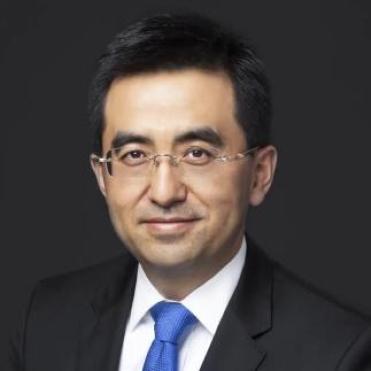
Senior Vice President of Baidu Group and Chairman of Baidu Data Management Committee
Li deli
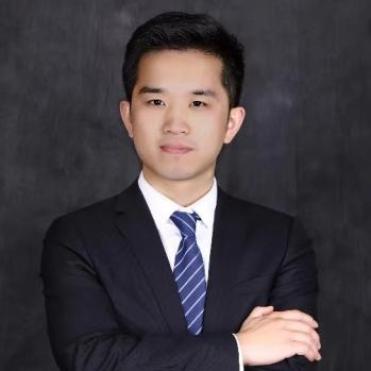
Director of Intellectual Property Department I of Beijing Huixiang Law Firm, lawyer of senior equity partner, and member of the expert database of lawyers of Rule of Law Daily.
Original title: "Rule of Law Roundtable | AI Era Coming: Does the" work "of generative artificial intelligence enjoy intellectual property rights? 》